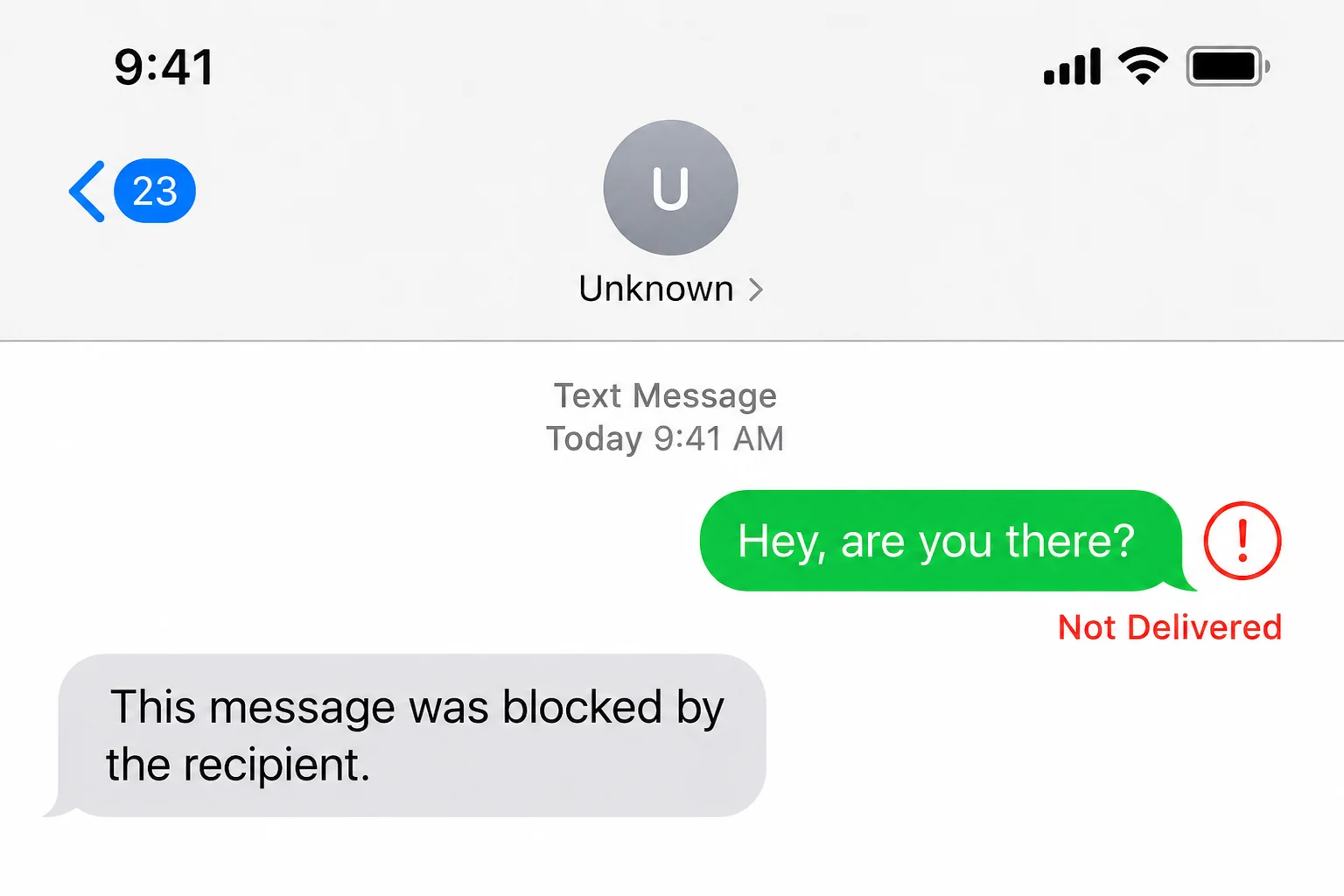
If you’re searching for a fake blocked text message, you may want to create a realistic blocked conversation for a mockup, social media post, app demonstration, or personal project. Many people also use fake message screenshots for storytelling, UI design, or educational examples. Whatever your reason, it’s important to understand how these fake conversations work and how to create them responsibly.
A fake blocked text message is a simulated conversation that looks like a real blocked text exchange but isn’t actually sent or received. With the help of message mockup tools and screenshot generators, you can design convincing conversations without affecting your real messages or contacts. These tools are useful for creative projects, presentations, and testing, but they should never be used to mislead, scam, or harm others.
In this guide, you’ll learn what a fake blocked text message is, the best tools to create one, and the safest ways to use realistic message mockups. You’ll also discover practical tips, common mistakes to avoid, and the differences between real blocked messages and fake screenshots, helping you create authentic-looking designs while using them ethically and responsibly.
What Is a Fake Blocked Text Message?
A fake blocked text message is a message, screenshot, or chat conversation that has been edited or generated to make it look like a text could not be delivered because the sender was blocked. In reality, the message may never have existed at all.
People create fake message screenshots for different reasons. Some use them in comedy videos or social media posts, while others create them as harmless visual demonstrations. Unfortunately, fake screenshots can also be used to spread false information or create confusion.
One of the biggest misconceptions is that your phone will always tell you when someone blocks your number. In most cases, that simply isn’t true. Mobile carriers and messaging apps rarely display a direct notification saying you’ve been blocked.
Instead of trusting a single screenshot, look at the overall situation. Network problems, airplane mode, privacy settings, or temporary service outages can also affect message delivery.
| Platform | Can Fake Screenshots Exist? | Shows a Direct “Blocked” Message? |
|---|---|---|
| iPhone | Yes | No |
| Android | Yes | No |
| Samsung | Yes | No |
| Yes | No |
Understanding these differences helps you avoid false assumptions and protects you from misleading content online.
Fake Blocked Text Message on iPhone
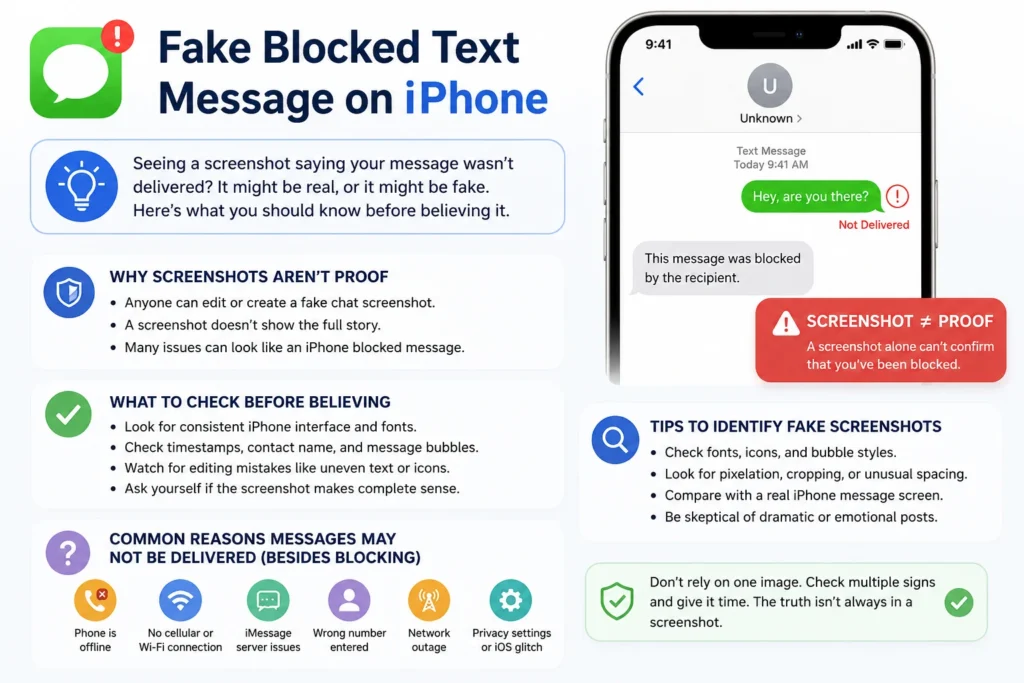
Many people search for fake blocked text message iPhone because Apple’s Messages app has a simple, familiar design that can easily be copied in edited images. As a result, fake screenshots often look realistic at first glance.
If someone sends you an image claiming your number has been blocked, remember that a screenshot alone doesn’t confirm anything. The image could have been edited, generated by a fake chat tool, or taken out of context.
When checking whether an iPhone message is genuine, consider these points:
- Don’t rely on a single screenshot.
- Missing the Delivered label doesn’t always mean you’ve been blocked.
- Internet issues can also delay message delivery.
- Ask for context before making assumptions.
If you’re unsure, the best approach is direct communication rather than guessing based on an image.
Fake Blocked Text Message on WhatsApp
A fake blocked text message WhatsApp usually appears as an edited conversation designed to imitate the app’s familiar chat layout. Because many people use WhatsApp every day, fake conversations can sometimes look convincing.
However, a screenshot is never enough to prove that someone has blocked you. Several normal situations can create similar signs, including privacy settings, poor internet connections, or changes to a user’s account.
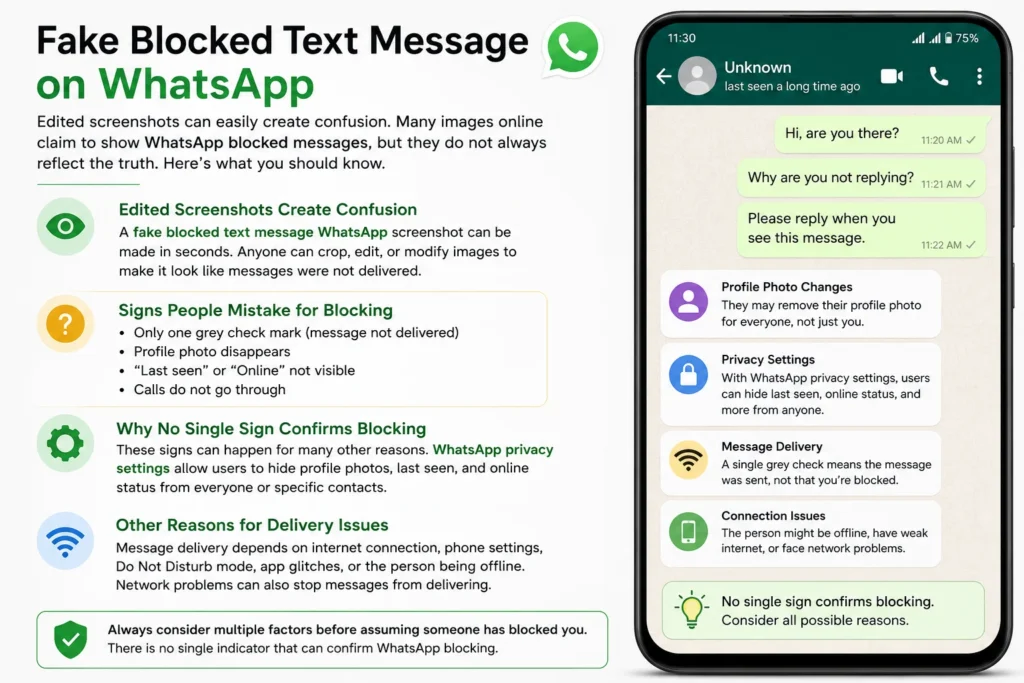
Instead of focusing on one clue, consider several indicators together. For example, you may notice profile photo changes, message delivery delays, or unavailable status information. Even then, these signs do not automatically confirm that you’ve been blocked.
Taking a calm, fact-based approach helps prevent misunderstandings and unnecessary worry.
60+Schedule WhatsApp Messages in Seconds
Fake Blocked Text Message on Android & Samsung
Users of Google Android phones and Samsung Galaxy devices often wonder whether a screenshot showing a blocked message is genuine. Because Android allows more customization than many platforms, edited conversations and fake chat screenshots are relatively common online.
If you receive a suspicious image, ask yourself a few simple questions:
- Is it only a screenshot?
- Does the conversation look natural?
- Are the timestamps consistent?
- Could there be another explanation, such as a network issue?
Looking at the bigger picture is always better than relying on one image. A fake screenshot cannot confirm that someone blocked your number, and assuming otherwise can lead to unnecessary stress or misunderstandings.
Fake Error Message Text Copy and Paste
Sometimes people search for fake error message text copy and paste because they’ve seen screenshots online or want to understand what these messages look like. While fake messages can be edited to appear convincing, it’s important to remember that they do not prove a message was actually blocked or failed to send.
Real messaging services use different wording depending on your phone, carrier, or app. Because of this, there’s no single error message that always means you’ve been blocked.
Here are a few common delivery-related messages you might genuinely see on different platforms:
- “Message not delivered. Please try again.”
- “Unable to send message.”
- “Waiting for connection.”
- “Message sending failed.”
- “Delivery unsuccessful.”
- “Network error. Try again later.”
These messages are usually caused by:
- Poor internet connection
- Temporary network outages
- Airplane mode being enabled
- The recipient’s phone being turned off
- Carrier service issues
Instead of assuming you’ve been blocked, check your connection and try sending the message again later. Looking at the full situation is always more reliable than relying on a single message or screenshot.
Fake Blocked Text Message Apps
Many websites advertise fake blocked text message APKs or apps that claim to generate realistic conversations. While some are designed for entertainment, others may request unnecessary permissions or expose your device to security risks.
Before downloading any app, consider these safety tips:
- Download apps only from trusted app stores.
- Read recent user reviews.
- Check the permissions the app requests.
- Avoid downloading unknown APK files from unofficial websites.
- Keep your phone’s security software up to date.
If your goal is simply to learn how fake conversations look, educational articles and demonstrations are much safer than installing unknown software.
Protecting your privacy is always more important than experimenting with apps that could put your personal information at risk.
How to Tell If a Text Message Is Fake
Fake text messages have become more convincing, but there are still several warning signs you can watch for.
Look for these clues:
- Unusual grammar or spelling mistakes.
- Low-quality or cropped screenshots.
- Inconsistent fonts or spacing.
- Missing timestamps or contact details.
- Messages that create unnecessary panic or urgency.
- Requests for personal information or verification codes.
- Links from unknown or suspicious websites.
Scammers often rely on emotional reactions instead of facts. If a message asks you to act immediately, pause for a moment and verify the information before responding.
When possible, contact the person through another trusted method instead of relying only on a screenshot or forwarded message.
How to Tell If an SMS Message Is Really Blocked
One of the biggest myths is that you’ll receive a clear notification when someone blocks your number. In reality, most SMS services don’t work that way.
A message that doesn’t receive a reply doesn’t necessarily mean you’ve been blocked. There are many possible explanations, including:
- The recipient is busy.
- Their phone is turned off.
- They have no network coverage.
- Their inbox is full.
- There is a temporary carrier problem.
On messaging apps, different indicators may appear, but even those aren’t definitive proof of blocking.
The healthiest approach is to avoid making assumptions based on technology alone. If the situation is important, respectful communication is usually the best way to clear up misunderstandings.
💡 Safety Tip: Don’t let screenshots or rumors damage relationships. Technology isn’t always perfect, and delivery problems happen for many reasons besides blocking.
Frequently Asked Questions
1. What is a fake blocked text message?
A fake blocked text message is an edited or generated message or screenshot that makes it appear a text was blocked or failed to deliver, even though it may not reflect a real conversation.
2. Can I tell if someone blocked my SMS messages?
Not with complete certainty. Most mobile carriers don’t send a direct notification when you’re blocked, so it’s best to consider several signs instead of relying on one clue.
3. Why does my message say it wasn’t delivered?
Failed delivery can happen because of poor internet, network outages, service issues, or the recipient’s device being unavailable. It doesn’t automatically mean you’ve been blocked.
4. Are fake text message screenshots easy to create?
Yes. Modern editing tools and chat generators can produce realistic-looking screenshots. That’s why screenshots alone shouldn’t be treated as reliable evidence.
5. How can I protect myself from fake text message scams?
Verify information before reacting, avoid clicking suspicious links, never share personal information, and download apps only from trusted sources.
Conclusion
Understanding fake blocked text message examples can help you avoid confusion, misinformation, and unnecessary stress. While edited screenshots and fake conversations may look convincing, they rarely tell the full story. Network issues, privacy settings, and temporary service problems can all affect message delivery without meaning you’ve been blocked.
The best approach is to stay informed, verify information carefully, and avoid jumping to conclusions based on a single screenshot. Whether you use an iPhone, Android phone, Samsung device, or WhatsApp, taking a calm and informed approach will help you make better decisions.
If you found this guide helpful, explore our other messaging tips and troubleshooting articles to learn more about common text message issues and how to solve them with confidence.

Ruby Collins is a gentle storyteller who turns emotions into simple, meaningful words. Her writing focuses on love, warmth, and the quiet feelings people often struggle to express.